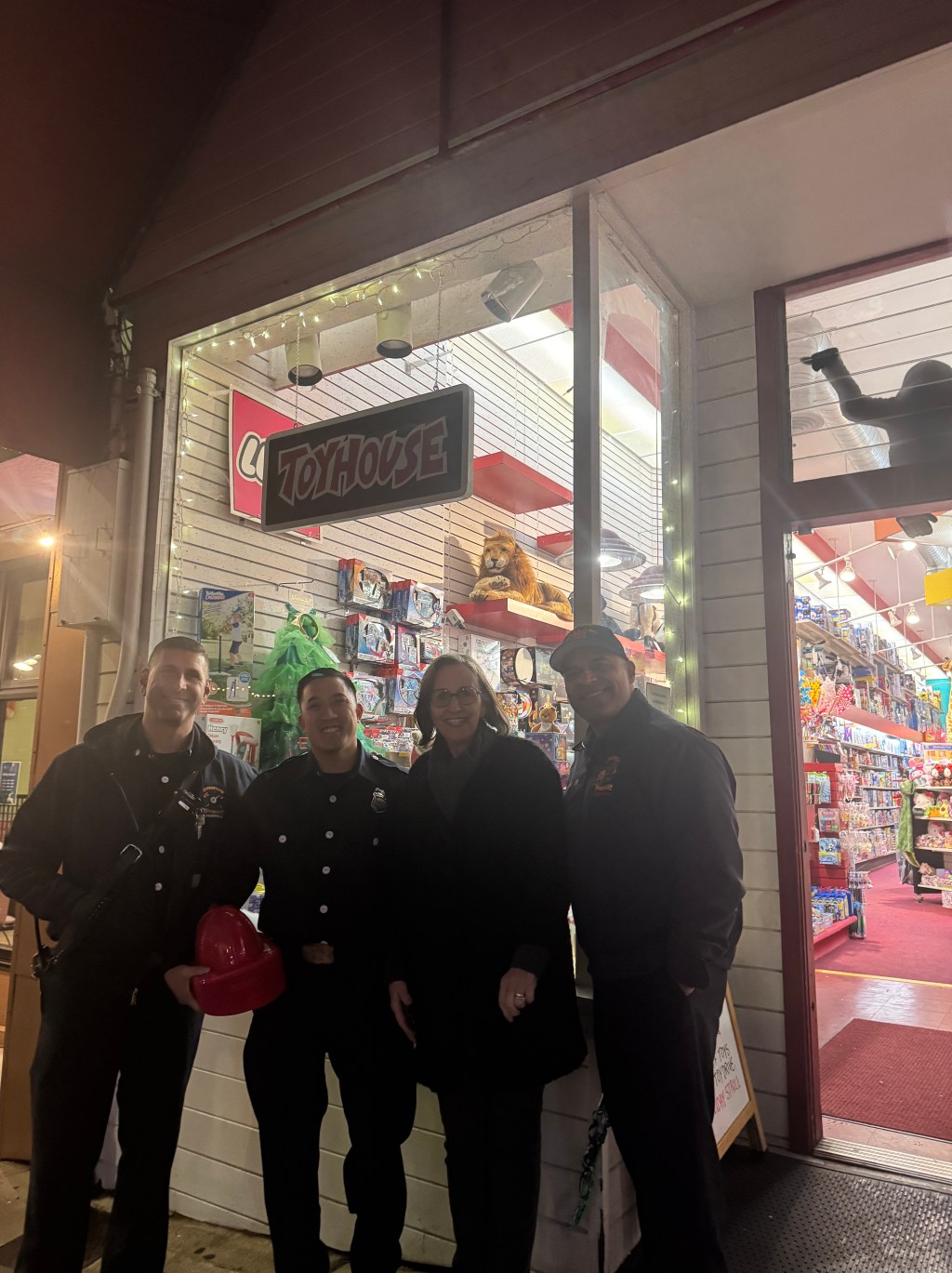
For over five decades, nestled in the heart of Montclair Village, a small but mighty toy store has stood resilient against waves of economic change, shifting consumer habits, and the relentless march of technology. Unlike many of its competitors—Toys “R” Us, KB Toys, and countless independent shops that have come and gone—this family-owned store has endured, thanks to a deep commitment to personal service, legacy of trust built over generations, and of course complimentary gift wrapping.
I sat down with Barbara Tomasco, my grandmother and the store’s owner, to learn more about how this small business has not only survived but continued thrived for over 50 years. As she recounted the history of the shop, it became clear that its success was no accident—it was a product of sharp business instincts, accountable customer service, and a trustworthy set of employees.
The Early Days: A Side Hustle Turned Legacy
The store’s start dates back to 1971, when my grandfather, still in college at the time, had the opportunity to purchase a tiny toy shop on Lakeshore Avenue. He recruited a friend and what started as a side business quickly became his primary focus. Over the years, the store expanded, taking over neighboring spaces, growing in both size and reputation.
By the 1980s, the store was a staple in the community, known for its vast selection of toys, books, and games. It wasn’t just a place to buy a gift—it was a place where children’s birthdays were saved at the last minute with expert recommendations and beautifully wrapped packages were topped with their signature bow.
Riding the Waves of Change
Running a toy store for 50 years means witnessing massive shifts in consumerism. In the early days, my grandmother and grandfather relied on trade shows in New York, Germany, and Italy to stay ahead of trends. They were there for the Cabbage Patch Kids craze, the Beanie Baby frenzy, and the rise of pokemon.
But the biggest challenges weren’t just toy trends—they were industry-wide changes that opposed a threat to independent stores. First came the big-box retailers. When Toys “R” Us opened just five miles away, many worried this would be the end of small toy stores. But customers quickly realized that while the chain store offered low prices, it lacked the personal touch—no knowledgeable staff, no gift wrapping, no warm welcome. The small toy store held its ground.
Then came Amazon, a force unlike anything before. Unlike Toys “R” Us, which had eventually collapsed under its own weight, Amazon wasn’t going anywhere. Yet, my grandmother wasn’t intimidated. “A lot of my customers tell me they’d rather buy from a small store,” she said. “They want to see it, touch it, and they want to support a local business.”
Adapting Without Losing Identity
Despite the store’s old-school approach—no website, no social media, no online sales—it has adapted in small but meaningful ways. During the pandemic, my grandmother pivoted overnight to a phone-order business, personally taking calls, arranging gift-wrapped pickups, and ensuring customers could still access the toys they needed. The store’s loyal customer base responded, and sales rebounded quickly.
While some things have changed—hours are shorter, and a plexiglass barrier remains at the register—the essence of the store has not. Personal relationships remain at the heart of everything. “Every day, someone walks in and says, ‘I’m so glad you’re still here,’” my grandmother shared.
The Future of a Legacy
As I listened to my grandmother reflect on the store’s history, I couldn’t help but think about its future. The retail world continues to evolve, shaped by AI, automation, and global trade shifts. Yet, the values that built this business—service, trust, and deep community ties—are timeless.
When I asked her what she hopes for the store’s future, she paused. “If a family member doesn’t want to continue it, I hope it goes to someone who values it the way we have—maybe two young parents who want to keep this kind of store alive.”
Fifty years from now, the retail landscape will look entirely different. But whether through a storefront or new technology, I believe there will always be a place for businesses like this—ones built not just on products, but on relationships, history, and heart.
 Pathways and profiles
Leave a comment